
TACTICS
Beyond the Map Pack: Using LocalBusiness Schema to Expand Your Service Radius
The biggest frustration in Local SEO is the “Proximity Penalty.” You can have the best plumbing company in the county, but if a searcher is standing 10 miles outside of your Google Business Profile (GBP) radius, you vanish from the Map Pack. To beat the proximity filter, you have to win in the organic results.


Breaking the Proximity Barrier
If you don’t have a physical address in a target city, you cannot mathematically win the Google Maps pack there. But you can win the localized organic search results below the map. To do this, Google needs undeniable proof that your entity is intrinsically linked to that neighboring location.
Most local websites attempt to solve this by stuffing city names into the footer. Google’s NLP algorithm ignores this as spam. The correct method is to map geographic entities using structured data.
- GeoCoordinates: Pinpoints your exact latitude and longitude, verifying your origin.
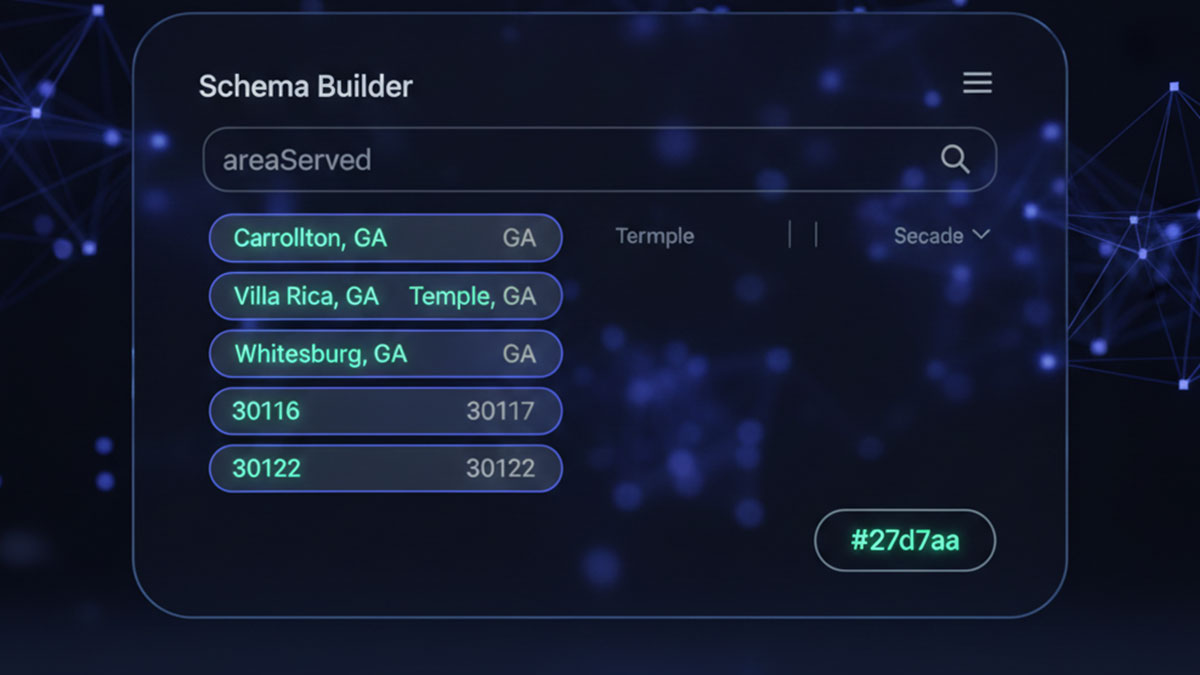
- areaServed: A critical JSON-LD property that allows you to list specific cities, counties, or zip codes where your services are available.
- hasMap: Ties your schema directly to your verified Google Maps URL, closing the trust loop.
The EAP Local Matrix Workflow
With Schema Pillar Pro, expanding your service radius is baked directly into the visual builder, requiring zero code manipulation.
- Deploy the Builder: Open the EAP Drawer on your location page or service page and select the
LocalBusinessorServicebuilder. - Define the Territory: Scroll to the “Area Served” section. Instead of hoping Google reads your paragraph text, input the exact city names, states, and postal codes you are targeting.
- Publish the Matrix: EAP outputs a pristine
LocalBusinessJSON-LD payload. When Google crawls this page, it no longer sees a business trapped in one zip code; it sees a verified, wide-reaching entity that is highly relevant to surrounding geographic search queries.
Trapped by the Google Map Pack?
Break out of your zip code. Use EAP to map your business entities to surrounding cities and dominate organic local search.