

Every few months, Google announces a “Broad Core Algorithm Update,” and SEO Twitter immediately descends into panic. Traffic graphs plummet, forum threads fill with horror stories, and agencies scramble to explain to clients why their leads just dropped by 40%. But there is a specific class of website that never seems to crash.

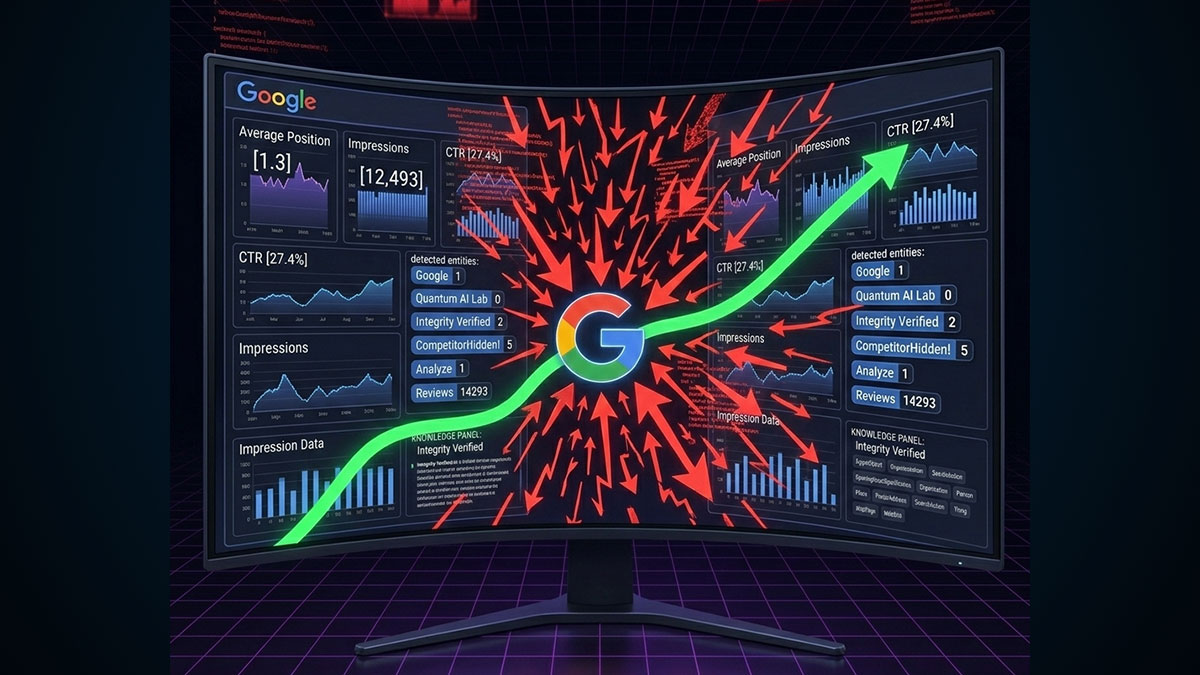

What Gets Hit in a Core Update?
If we look closely at the data from the last several major Google rollouts, the casualties all share the same architectural flaws:
- Flat Architecture: Hundreds of isolated blog posts with no clear hierarchy.
- Unverified Identity: Faceless content without robust
PersonorOrganizationschema backing it up. - Link Dependency: Sites that rank purely because they bought high-DR backlinks, rather than proving deep topical knowledge.
The “Digital Moat” of Entity Density
Entity Density is the measure of how completely a brand covers a topic and its related sub-topics. Google’s ultimate goal is to provide users with the most comprehensive answer possible. If your website maps out a core entity (like “Cybersecurity”) using a massive Pillar page, connects it to 20 specific Cluster pages, and wraps it all in error-free JSON-LD, you create a “Digital Moat.”
When an algorithm update rolls through, it is looking for spam to demote. It sees your dense, perfectly structured schema graph, categorizes it as a highly trusted Knowledge Graph node, and simply moves on.
Building the Moat with EAP
The Entity Authority Platform was specifically engineered to build these moats automatically.
- By using the Global Graph, EAP verifies your brand’s identity and
sameAsrelationships, making you a trusted entity. - By using the Pillar Builder, EAP automatically groups your content into dense semantic hubs.
- By continually pushing these verified hubs through the EAP Indexing Engine, you train the algorithm to rely on your site as the baseline for your niche.
Stop fearing the next Core Update.
Insulate your clients’ traffic. Build a high-density digital moat with the Entity Authority Platform today.