

AGENCY GROWTH
Backlinks Are Depreciating: Why Entity Density is the New Currency of SEO
For over two decades, the SEO industry has treated backlinks as the ultimate currency. But Google’s recent core updates have sent a clear message: the era of gamifying search results with purchased, low-tier links is coming to an end.
What is Entity Density?
Entity Density is the measure of how deeply and accurately your website connects related concepts (entities) together. If you want to rank for “Business Insurance,” Google doesn’t just look for that keyword. It looks for the presence of connected entities like liability, premiums, workers compensation, and underwriting.
When you build a Hub and Spoke architecture, you are artificially increasing your Entity Density. You are proving to Google that you have exhaustive knowledge of the entire semantic neighborhood.
- Link Equity: Relies on third-party websites vouching for your content (Hard to control, expensive, prone to algorithm penalties).
- Entity Density: Relies on your own internal architecture and schema (100% in your control, compounds over time, algorithmic moat).
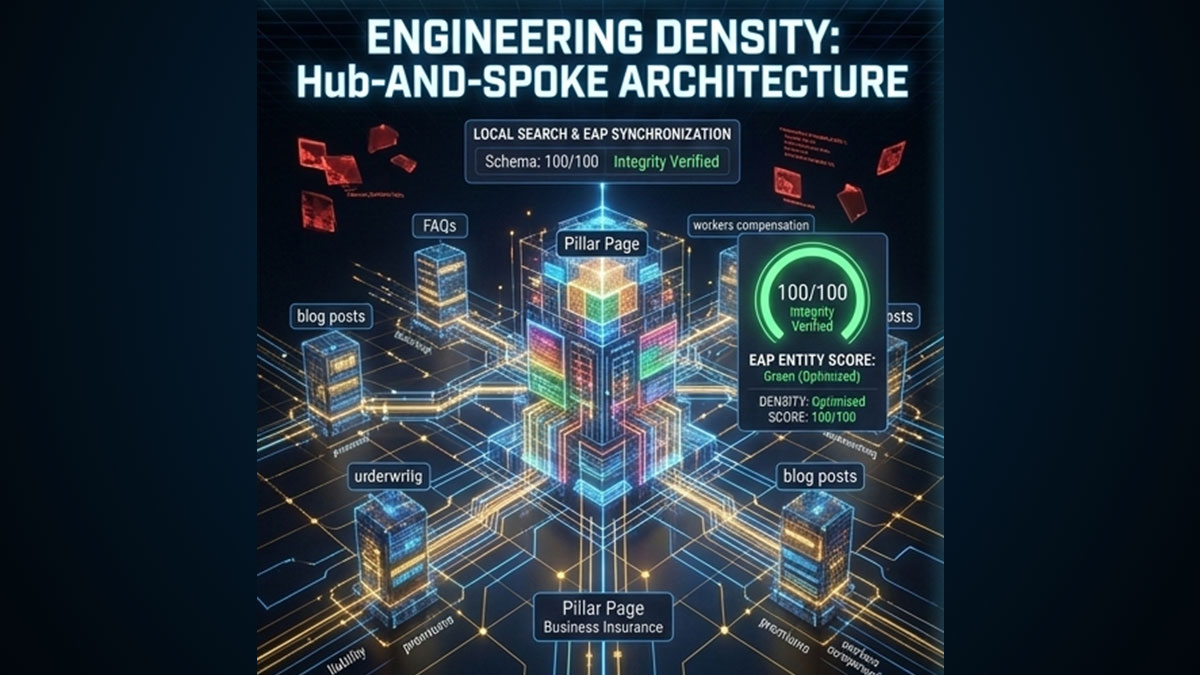


Engineering Density with the EAP Workflow
Agencies that pivot from “Link Builders” to “Entity Architects” are going to dominate the next decade of SEO. Here is how you use Schema Pillar Pro to execute this for your clients:
- Establish the Pillar: Designate your core service page as a Pillar inside the EAP Drawer.
- Map the Clusters: Write 5-10 hyper-specific FAQs or blog posts around that service. Use the EAP Cluster Search tool to tie them directly to the Pillar.
- Execute the Internal Links: The single most important step. EAP generates a “Clean HTML List” of all your attached clusters. Copy this block directly from the drawer and paste it into your Pillar page content to physically bridge the entities.
- Monitor the Score: Watch the live EAP Entity Score in your dashboard turn from Yellow to Green as your semantic web thickens.
Stop wasting client budget on toxic links.
Invest in architecture. Build an algorithmic moat using Schema Pillar Pro’s internal mapping engine.