

SYSTEM UPDATES
E-E-A-T is an Entity Problem: Structuring “Person” Authority in a Faceless Web
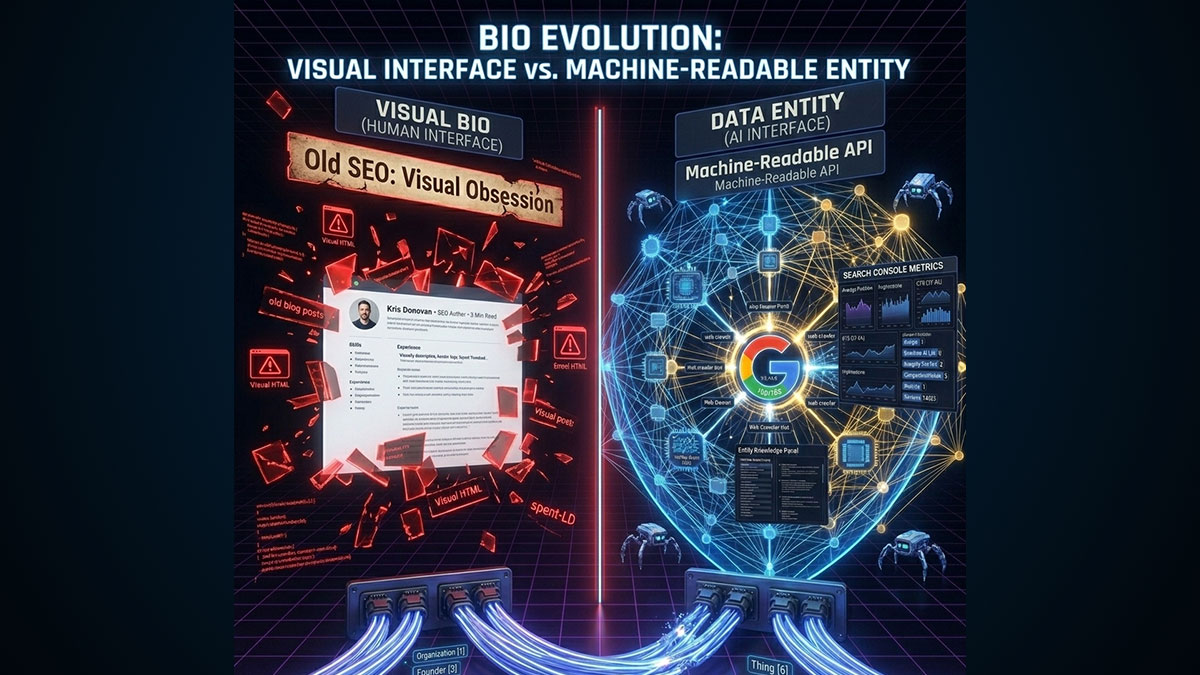
The internet is drowning in a tsunami of AI-generated content. In response, Google has made E-E-A-T the single most important invisible ranking factor. But here is the secret most SEOs miss: Google cannot read your author bio. It reads your entity footprint.
Why Author Boxes Are Failing
For years, the standard practice was to install a plugin that put a little box with a headshot and a two-sentence bio at the bottom of an article. Today, an LLM can generate that in three seconds.
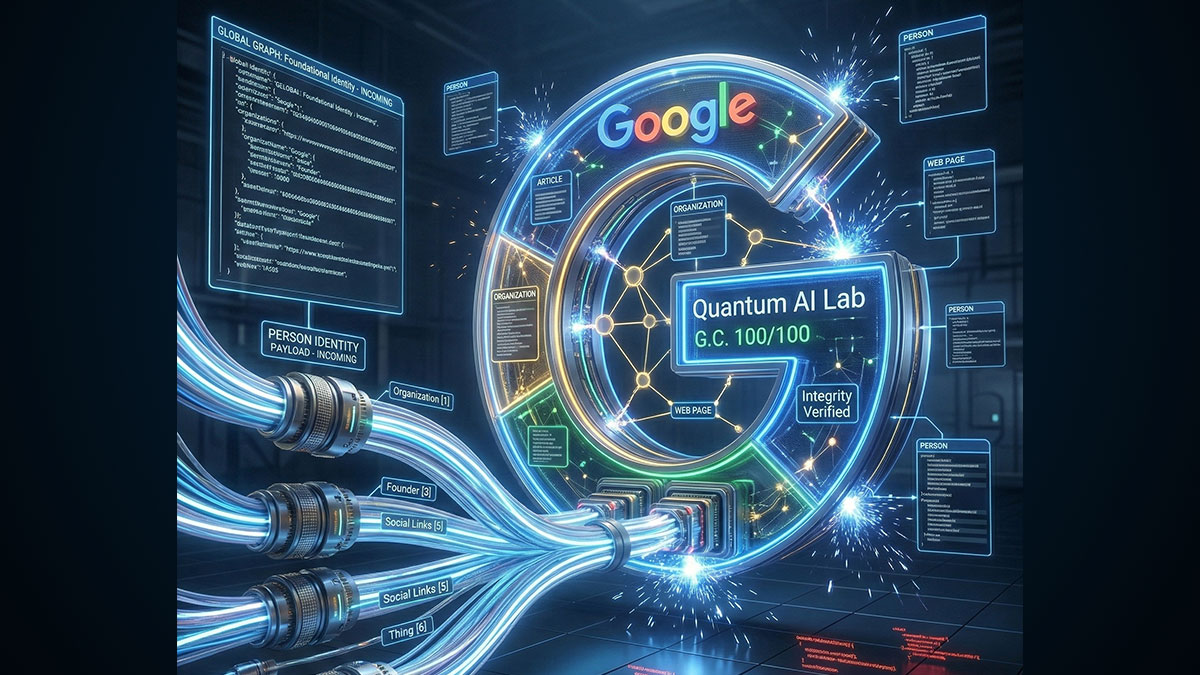
To prove real human expertise, you have to feed Google undeniable, machine-readable proof. This means creating a Person schema that contains:
- alumniOf: Linking the author to the university where they gained their education.
- knowsAbout: Explicitly defining the topical entities the author is an expert in.
- sameAs: Hardcoding links to the author’s verified LinkedIn, Twitter, and professional directories.
- worksFor: Tying the author directly to your Global Organization graph.
Automating E-E-A-T with Schema Pillar Pro
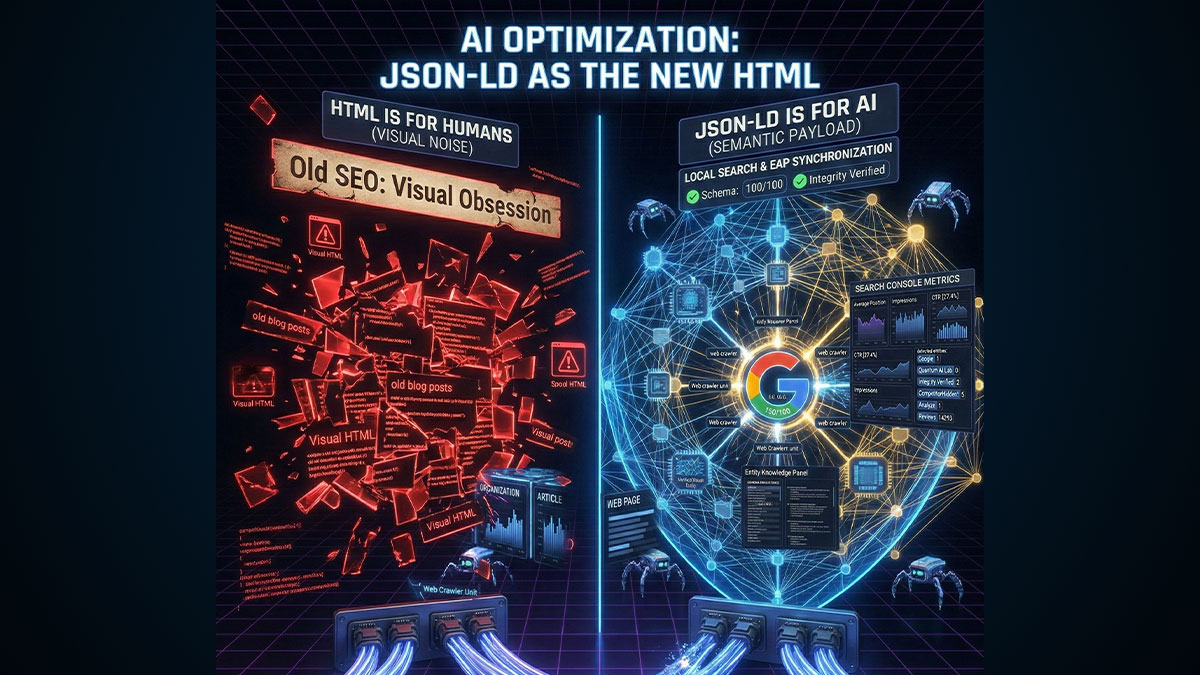
Manually writing this JSON-LD for every author is a nightmare. Schema Pillar Pro automates the entire process through the Global Graph Engine.
- Enrich the User Profile: EAP adds dedicated E-E-A-T fields directly into standard WordPress user profiles. You fill out their Job Title, Alumni, Awards, and “Knows About” entities once.
- The Dynamic Injection: When that author publishes a post, the SPP Editor Manager automatically grabs their specific entity payload and perfectly injects it into the page’s schema graph.
- The Result: Every time Google crawls your content, it sees a verified, fully-fleshed
Personentity attached to the information, instantly satisfying E-E-A-T requirements and bulletproofing you against spam filters.
Stop losing traffic to faceless AI spam.
Validate your human experts and command trust in the SERPs using EAP’s automated Person entity injection.